
Remote Pig Tracking: Is Temporary or Permanent Right for Your Pipeline?
Remote pig tracking gives operators greater visibility into tool location, speed, progress, and passage events without requiring personnel at every tracking location. Once an operator decides remote tracking makes sense, here’s another important question to consider:
"Should the PIG tracking system be deployed temporarily, or installed permanently?"
There isn't one answer that works for every operation. Pigging frequency, accessibility, pipeline configuration, program objectives, and long-term costs can all influence which approach provides the most value. For operators across North America, here are five considerations that can help determine whether temporary or permanent remote tracking is the best fit.
Planning your next pigging program?
Talk to our team about which tracking approach makes sense for your pipeline.
1. Start With How Frequently the Pipeline Is Pigged
Frequency is one of the clearest places to start. For a one-time ILI project or a pipeline that is pigged infrequently, temporary remote tracking can provide the visibility operators need without investing in permanent infrastructure. The equation changes when the same pipeline is pigged repeatedly.
Permanent tracking units remain installed at established locations, allowing operators to monitor future runs without repeatedly deploying equipment and resources to the same tracking points. This can simplify planning, reduce repeat mobilizations, and create a more consistent tracking approach from one run to the next.
For operators, the more frequently a pipeline is pigged, the more valuable it becomes to think about tracking as a long-term program strategy rather than a requirement to solve before every individual run.
2. Consider the Cost of Repeated Mobilization
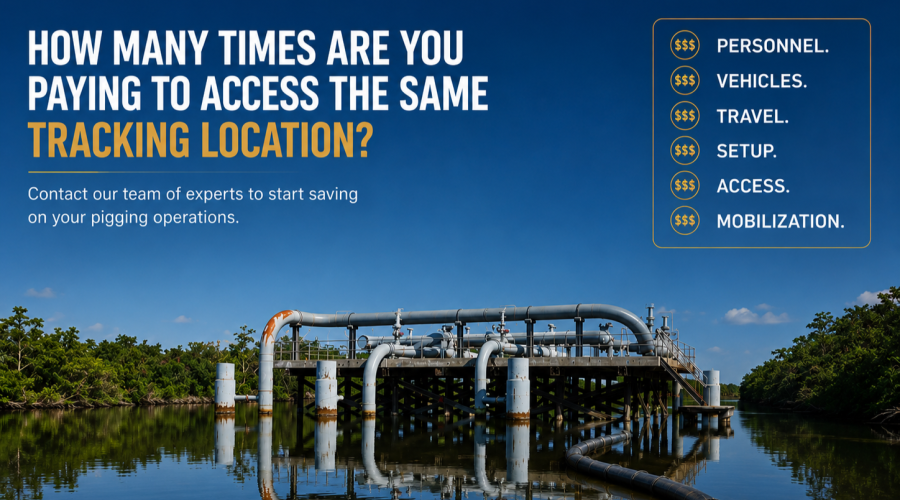
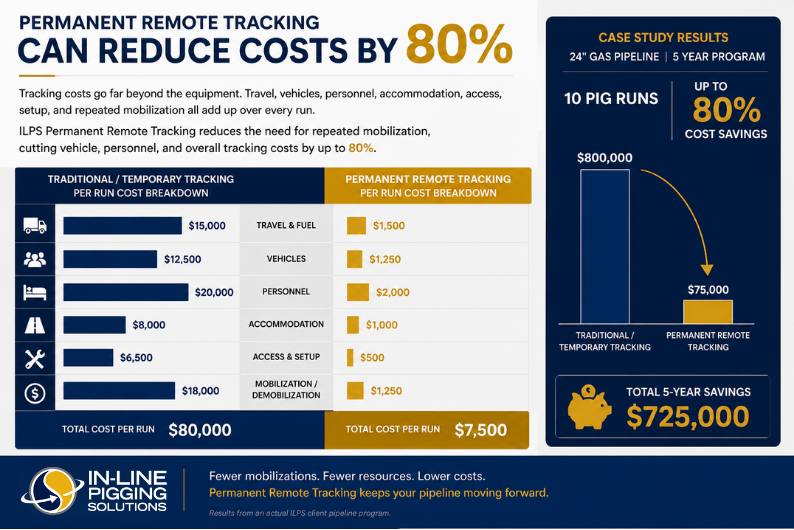
The cost of tracking goes beyond the equipment itself. Personnel, vehicles, travel, accommodation, site access, setup, and mobilization all contribute to the true cost of each run.
For pipelines with recurring pigging requirements, permanent remote tracking can reduce the need to repeatedly mobilize personnel and equipment to established tracking locations. Over multiple runs, those avoided mobilizations can translate into meaningful operational savings, with ILPS projects demonstrating savings of up to 80%.
For operators, the more useful comparison is often not the cost of temporary versus permanent tracking on a single run, but the total cost of supporting the program over several years.
3. Evaluate Access to Critical Tracking Locations
Not every AGM location is equally easy to reach. Remote terrain, private access, weather, road conditions, and other site constraints can make repeated deployment more time-consuming, resource-intensive, and difficult to coordinate.
For locations operators need to monitor repeatedly, permanent tracking can reduce the need to access and redeploy equipment at the same sites for every run. Temporary systems provide greater flexibility when tracking locations change between projects or when the frequency of use doesn’t justify permanent infrastructure.
For operators, the decision comes down to how often those locations are used, how difficult they are to access, and whether permanent infrastructure can simplify future operations. The best solution is the one that reflects how the pipeline is actually operated.
4. Think About Consistency Across Multiple Pig Runs
Recurring pigging programs create something a single run cannot: a consistent operational history.
With permanent tracking at established AGM locations, operators can capture passage events from the same points run after run, making it easier to compare tool progress and associated data over time. This archived run information creates a more consistent record of how tools have moved through the pipeline.
For operators managing a long-term pigging or integrity program, that history has lasting value. Instead of tracking information living within individual project files, it becomes part of a growing operational record that can support planning and decision-making from one run to the next.
5. Build the Tracking Strategy Around the Program
Temporary and permanent tracking don’t have to be an either/or decision. For many pipelines, the most effective strategy may be a combination of both. Permanent units can be installed at frequently used, high-value, or difficult-to-access locations, while temporary remote or traditional tracking can provide flexibility everywhere else. This allows operators to invest in permanent infrastructure where it delivers the greatest long-term value.
Because ILPS supports traditional, temporary remote, and permanent tracking, our approach is built around the actual pipeline, operating conditions, and requirements of the program.
For operators across North America, that means the right level of technology and field support at each location, balancing real-time visibility, accessibility, flexibility, and long-term cost efficiency.
Which Approach Is Right for Your Pipeline?
Temporary remote tracking can be an effective solution for individual projects, changing tracking locations, or pipelines with less frequent pigging requirements. It gives operators real-time visibility without committing to permanent infrastructure where it may not provide long-term value.
Permanent remote tracking becomes increasingly valuable as pigging frequency increases, the same tracking locations are reused, or access and repeated mobilization create ongoing operational costs. For operators, the decision comes down to looking beyond the next run and considering how tracking can support the broader program over time.
ILPS supports operators across North America with traditional, temporary remote, and permanent tracking. Partnering with an experienced pigging and ILI team who offer a broad range of pipeline services means operators aren’t limited to one deployment model. Instead, we build the tracking strategy around the pipeline, your program, and solutions that deliver the greatest operational value.