
Launch and Receive Barrels Explained: A Practical Guide to Safer, More Reliable Pigging Operations
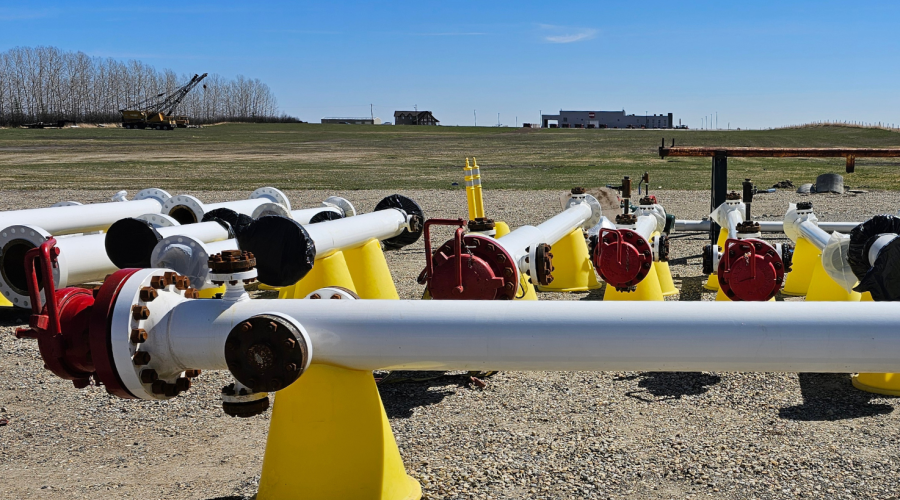
In any pipeline integrity program, success depends on consistency, control, and data quality. While attention is often placed on inline inspection (ILI) tools themselves, the equipment used to launch and receive those tools plays an equally critical role.
This article breaks down what launchers and receivers are, how they function, and the key design elements that directly impact safety, inspection accuracy, and operational efficiency.
Start With the Basics: What Is a Launcher and Receiver?
Without this controlled interface to direct the flow, operators would not be able to isolate sections of the trap for safe draining during launching or receiving operations, making pigging operations significantly more hazardous and potentially rendering the pipeline unpiggable.
Why Launchers & Receivers Matter More Than You Think
At a glance, a barrel may seem like a simple mechanical assembly, but its performance directly influences how effectively a pigging operation runs. A properly engineered barrel ensures:
- Safe interaction between personnel and pressurized systems
- Predictable flow movement at launch and receive
- Protection of high-value ILI tools
- Consistent conditions for accurate inspection data
In practical terms, the barrel sets the stage for everything that happens downstream. If conditions at launch are unstable, even the most advanced inspection tool can produce unreliable data.
How Launchers & Receivers Support Integrity Programs
To understand their value, it helps to think of pipeline barrels as control points within the integrity lifecycle.
They contribute by:
- Standardizing pigging operations: Creating repeatable conditions reduces variability between runs.
- Improving inspection reliability: Stable tool entry improves data quality and confidence in results.
- Reducing operational downtime: Efficient loading and retrieval minimize delays and re-runs.
- Enhancing overall safety: Controlled depressurization and tool handling reduce risk exposure.
When these factors are combined, the result is a more efficient and more reliable integrity program.
Key Design Elements & What They Actually Do
Not all launchers and receivers are created equal. Each design feature has a specific function that contributes to performance, safety, and usability in the field.
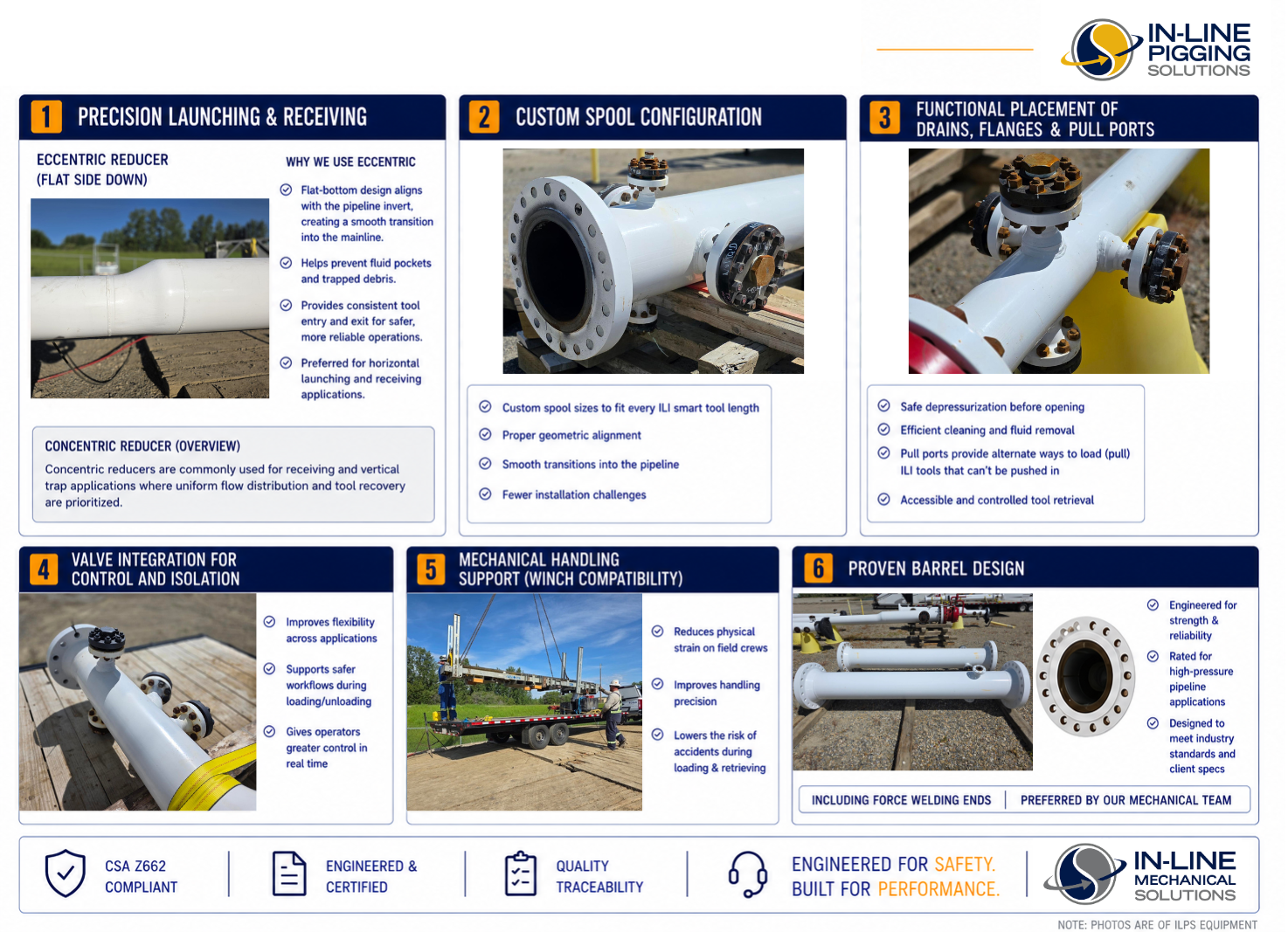
1. Precision Entry for ILI Tools
ILI tools often called smart pigs require stable, controlled entry conditions. Well-designed barrels:
- Guide the tool into alignment
- Prevent sudden impacts or misfeeds
- Maintain consistent launch velocity
This directly influences inspection accuracy and tool longevity.
2. Custom Spool Configuration
Every pipeline system has its own layout and constraints. Custom spool packages ensure:
- Proper geometric alignment
- Smooth transitions into the pipeline
- Fewer installation challenges
Customization isn’t a luxury, it’s essential for performance.
3. Functional Placement of Drains, Flanges, and Pull Ports
These components are critical for daily operations. Strategic placement enables:
- Safe depressurization before opening
- Efficient cleaning and fluid removal
- Pull ports to give you alternate ways to load (pull) ILI tools that can’t be pushed in
- Accessible and controlled tool retrieval
Small placement decisions can have a large impact on safety and efficiency.
4. Valve Integration for Control and Isolation
Valve systems allow operators to safely manage pressure and isolate sections of the barrel. These systems ensure:
- Improved flexibility across applications
- Safer workflows during loading/unloading
- Greater control in real time
5. Mechanical Handling Support (Winch Compatibility)
As tool sizes and weights increase, manual handling becomes less practical. Winch-compatible designs:
- Reduce physical strain on field crews
- Improve handling precision
- Lower the risk of accidents during loading and retrieving
6. Smooth-Bore Interior Design
Interior surface condition plays a bigger role than many expect. A smooth bore:
- Reduces turbulence and resistance
- Helps maintain steady tool speed
- Minimizes wear on sensitive inspection equipment
This contributes directly to data consistency and repeatability.
Engineering & Compliance to Ensure Reliability
Barrels operate under pressure and must meet strict regulatory and mechanical standards:
Designed to CSA Z662 Standards
Compliance ensures that each barrel meets requirements for:
- Material selection
- Structural integrity
- Safe operating conditions
Engineered and Certified
Each barrel is:
- Designed by qualified engineers
- Properly rated for its intended service
- Verified prior to delivery
Providing confidence that the equipment will perform in real-world conditions.
Full Quality Traceability
Quality assurance is not optional, it’s fundamental. That's why each barrel includes:
- Material Test Reports (MTRs)
- Full traceability of components
- Pressure testing documentation
This ensures transparency, accountability, and compliance with both regulatory and internal standards.
From Equipment to Execution: Why Support Matters
Even the best-designed equipment requires proper implementation. Mechanical support during pigging operations helps:
- Ensure proper setup and alignment
- Identify potential issues before they escalate
- Improve efficiency during execution
Combining well-engineered barrels with field expertise leads to more predictable and successful outcomes.
Bringing It All Together
Pipeline barrels are more than just access points; they are critical control mechanisms within pigging and inspection systems. When designed and applied correctly, they enable:
- Safer operations
- Better inspection data
- Fewer delays and re-runs
- Greater overall system reliability
For operators focused on long-term pipeline performance, understanding and prioritizing barrel design is a key step toward improving integrity outcomes.
FAQ: Pipeline Barrels and Pigging Operations
A launcher and receiver (also called traps, barrels, senders, or catchers) is a pressure-containing system that allows operators to safely insert and remove pigs or inline inspection (ILI) tools from a pipeline. It provides a controlled interface between the pressurized pipeline and external handling processes.
Launchers and receivers play a critical role in ensuring safe and controlled pigging operations. Properly designed barrels help protect personnel, maintain predictable tool movement, safeguard expensive inspection tools, and ensure consistent conditions for accurate inspection data.
Launchers and receivers act as control points that standardize pigging operations, improve inspection data reliability, reduce downtime by streamlining tool handling and enhance safety through controlled depressurization.
They allow operators to isolate and depressurize sections of the pipeline before opening, reducing the risks associated with high-pressure systems. Features like drains, valves, and proper component placement also help ensure safe operation.
Poor design can lead to unstable tool launches, inaccurate inspection data, increased wear on tools, operational delays, and higher safety risks. Even advanced ILI tools can produce unreliable results if launch conditions are inconsistent.
Precision entry refers to a controlled, stable way of introducing inspection tools into the pipeline. A well-designed barrel aligns the tool, prevents impacts or misfeeds, and maintains consistent launch velocity, which is essential for accurate inspections.
Every pipeline system is different. Custom spool configurations ensure proper alignment, smooth transitions, and correct sizing for various ILI tools. This reduces installation challenges and improves overall performance.
These components support day-to-day operations by enabling safe depressurization, efficient fluid removal, alternative loading methods (e.g., pull ports for difficult tools), and safer retrieval of tools.
Integrated valve systems allow operators to control flow and isolate sections of the barrel. This improves operational flexibility and enables safer loading and unloading procedures.
As pigs and inspection tools become larger and heavier, mechanical assistance reduces physical strain on crews, improves handling precision, and lowers the risk of accidents during loading and retrieval.
They are designed to meet standards such as CSA Z662, which ensures proper material selection, structural integrity, and safe operating conditions.
Each barrel includes:
- Material Test Reports (MTRs)
- Full traceability of components
- Pressure testing documentation
This ensures compliance, transparency, and reliability.
Yes. Mechanical support during pigging operations helps ensure proper setup, identify potential issues early, and improve overall efficiency and reliability during execution.
When properly engineered and implemented, they provide safer operations, more accurate inspection data, reduced downtime and fewer re-runs, plus improved overall pipeline reliability.