
Case Study: Pink Mountain Casing Spacers Installation
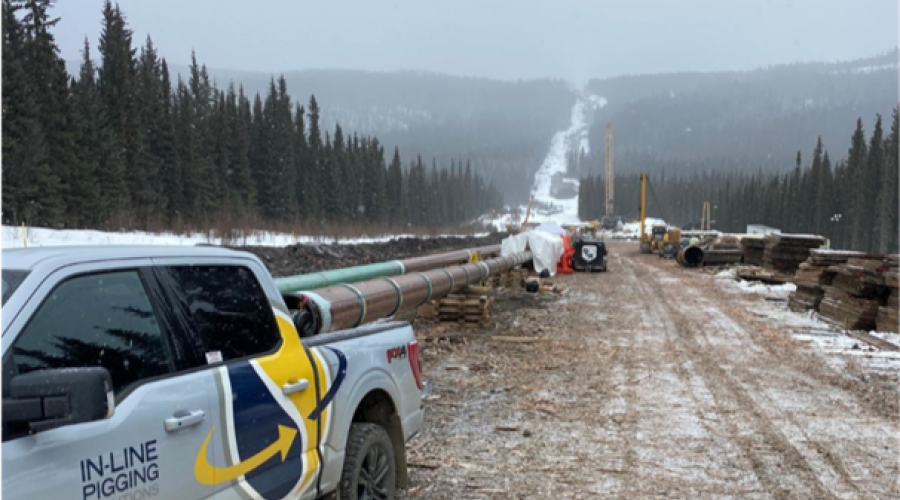
After failed bolt-on spacers caused coating damage during an HDD pull near Pink Mountain, BC, ILPS was brought in to develop and execute a new composite protection solution. Through coordinated planning and field execution, the project was completed ahead of schedule, helping the client maintain overall project timelines.
Overview
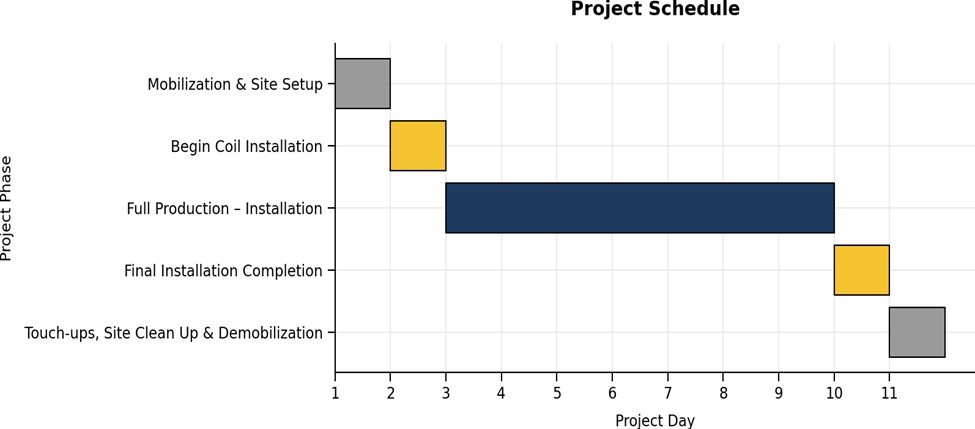
In-Line Pigging Solutions (ILPS) was brought in to build a composite solution plan for a client to execute an HDD pull under a river outside of Pink Mountain, British Columbia. The client had previously installed bolt-on spacers onto 490 meters of NPS24 pipe and completed an HDD pull through an NPS36 bore hole. Upon further inspection of the pulled pipe it was observed that the bolt-on spacers applied had failed and damage was sustained to the pipe coating. The pipe segment was then pulled back out of the bore hole, put up onto skid stacks and the bolt-on spacers were removed, and damaged sections were re-coated and re-inspected. ILPS provided an execution plan to install composite casing spacers (coils) and edge sealing kits (ESKs) and coordinated the logistics with the client and construction contractor to plan and execute the project. ILPS crews completed the project in eleven (11) days, under the initial time estimate. This supported the client’s ability to proceed with the HDD pull and maintain overall project schedule objectives.
Scope
ILPS provided a crew of six certified composite installers to handle the on-site execution of this project. It was initially determined that coils would be installed in increments of 9-12 feet, totaling 160 coils and ESKs. Further review from the client identified a 15m section of pipe did not require coil coverage, and the total install amount was lowered to 155 coils and ESKs. ILPS crew determined the logistical planning that was necessary to execute the project and worked closely with the construction contractor on-site who supported wherever necessary. All appropriate QA/QC documentation was completed by the ILPS crew, supporting traceability and quality assurance requirements through documented batch numbers and casing spacer serial numbers for each installation.
Hazard Management
Hazard controls were implemented through structured planning processes including daily tailgate meetings, field-level hazard assessments (FLHAs), coordination with construction contractor crews, and application of the hierarchy of controls to address cold exposure, worksite conditions, and chemical handling requirements.
Location & Weather
The project occurred in February, 35 km from Pink Mountain in northern British Columbia, roughly two hours north of Fort St. John. The location and weather posed numerous challenges to the completion of the project. Due to the remote location, crews were required to plan for and transport all necessary materials to site.
The average temperature for the 11-day project was -23°C (-9°F), with wind chill temperatures reaching -40°C (-40°F) throughout the week. Cold stress exposure risk was managed through layered PPE appropriate for extreme winter conditions, including cold-weather clothing, gloves, footwear, and high-visibility garments as required by site standards, in combination with heated work areas and coordination of work activities in low-temperature conditions. Installation specifications required minimum ambient and pipe temperatures of 10°C (50°F) to support proper application and curing performance. Thirteen tents were used at a time to create a corridor of coverage over the pipeline. Six large diesel-powered heaters with heat socks were used to create an appropriate installation temperature. ILPS crews worked with the construction contractor crews to efficiently set up, take down, and physically move the tents and heaters down the pipeline to ensure upcoming installation locations on the pipe reached required temperatures prior to coil installation. Heating equipment remained in operation as required to maintain installation temperature ranges, with monitoring in place to support both temperature control and safe operation of heating equipment.
Chemical Management
CSNRI’s manufacturer specifications required chemicals to be maintained between 10°C-25°C (50°F - 77°F) to ensure product integrity and performance. Prior to starting the application process, ILPS and construction contractor crews separated install chemicals from other supplies and placed them into a heated tool crib that was located on site. After confirming that the tool crib heating system exceeded the specified storage temperature range, an alternate controlled heating arrangement was implemented using heat socks connected to heaters to maintain chemical storage temperatures in the tool crib within specification. This solution allowed the chemicals to be kept at 22°C (73°F) for the duration of the project, and heating equipment was monitored to maintain appropriate storage temperature conditions. Chemicals were kept in the tool crib until ambient temperatures inside the tents reached 15°C (59°F), at which point they were brought in and pre-set up at install locations along the pipe.
Worksite
The physical project site presented several hazards that crews were required to manage, including frozen and slippery ground, uneven terrain, and muddy conditions caused by heaters melting layers of frost and snow; multiple layers of rig mats damaged by heavy equipment traffic; a 50 m elevation change along the pipeline; and high levels of activity from multiple construction crews performing various tasks across the site. Coordination with construction contractors was maintained to manage simultaneous operations, shared work areas, and changing site conditions in support of safe and efficient work execution. Housekeeping, material management, and waste handling practices were maintained throughout the project to support an organized worksite and minimize environmental impact within the right-of-way.
Execution
ILPS crews arrived onsite and separated chemicals from casing spacer kits for storage in a heated on-site tool crib, working alongside the construction contractor labour crew. Both segments of pipe were measured out in 9-12ft segments, starting with the section that was to be pulled in first, to ensure proper spacing of coils without needing to move skid stands, and to account for girth welds. Both crews began setting up tents over the first segment of pipe, to get the work areas prepared and bring both ambient and pipe temperature to a proper level for installation. Once work areas were prepared, batch numbers for chemicals and coils were recorded prior to installation.
Once initial project preparation was completed, ILPS crews began installing casing spacers. Two crews worked in tandem applying the coils, while a third crew prepared installation areas with supplies, completed QC documentation for each installation, and applied edge-sealing kits to cured coils. ILPS and the construction contractor crew worked closely to efficiently move heaters and tents along the pipeline. This ensured that coils had the necessary time to cure under heat, that a heated environment was available to apply edge-sealing kits, and that downstream coil locations had sufficient time to heat up to workable temperatures.
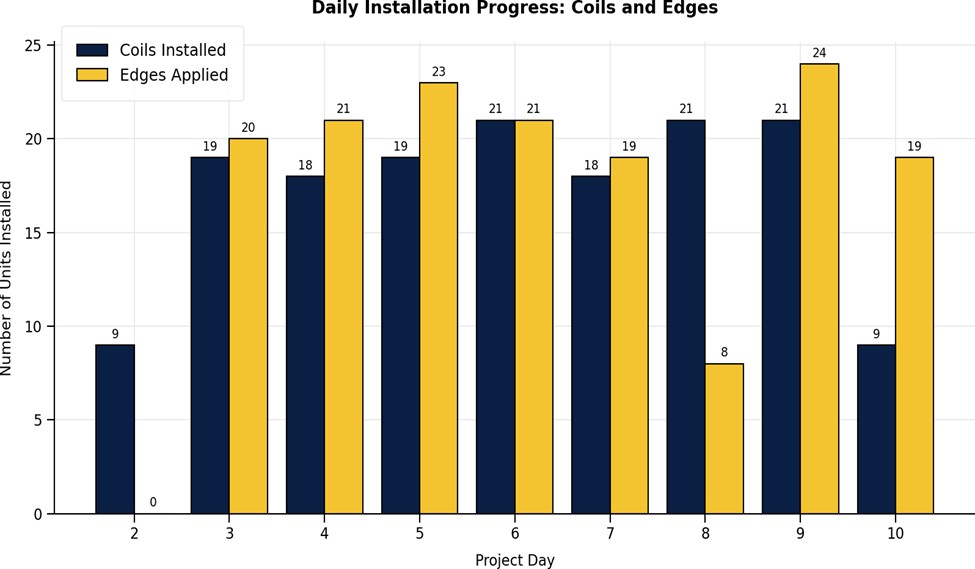
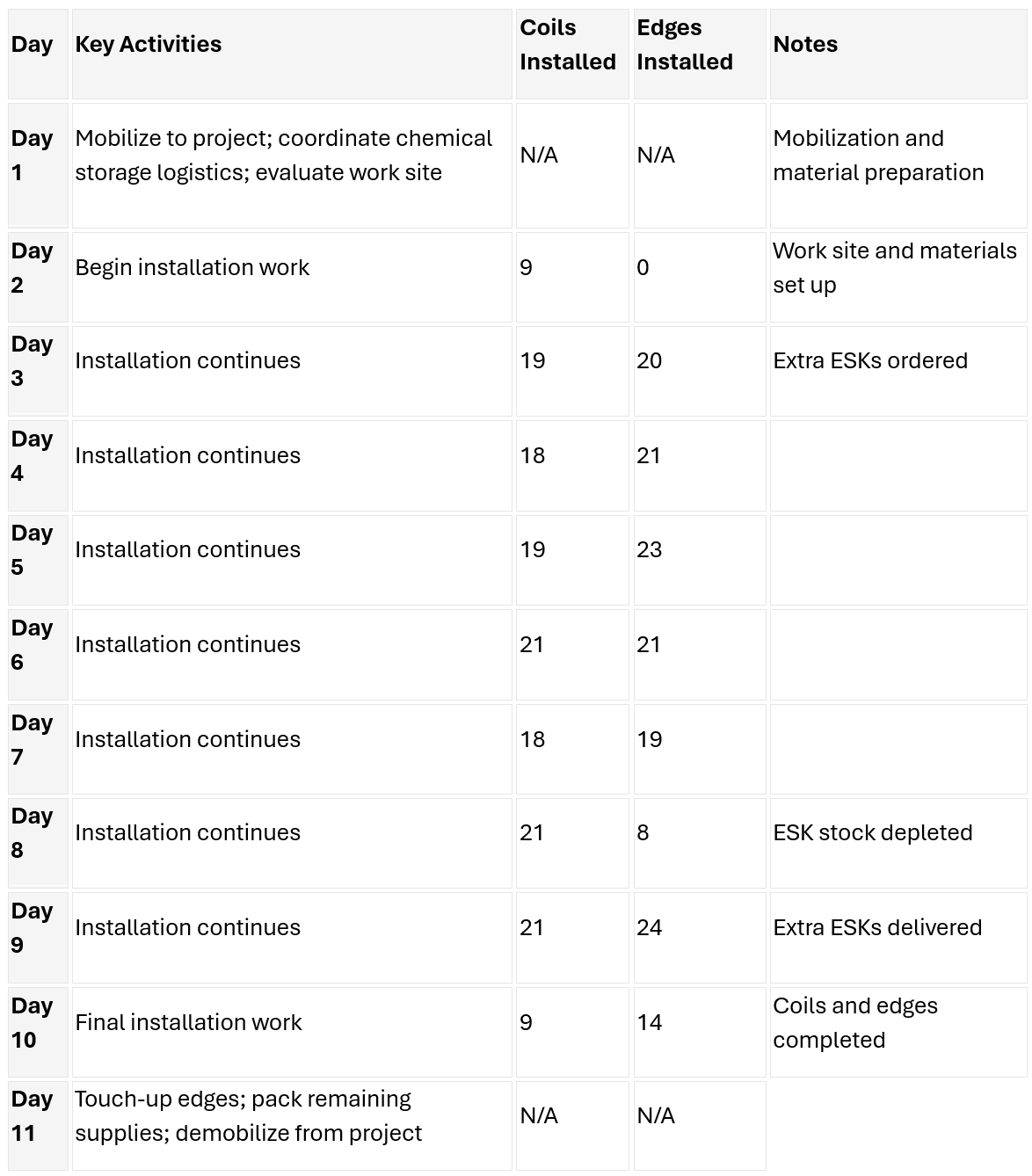
ILPS was able to complete the installation of 155 casing spacers and edge-sealing kits in nine (9) days, averaging ~17 coils and edges over the nine-day installation period.
Daily Breakdown
Leave camp at 0700hrs.
Joint tailgate safety meeting with construction contractor crew and client to review hazards, controls, and daily work scope.
ILPS crew tailgate discussion to review hazards, controls, and planned work activities for the day.
Prepare first installation sites for the next day.
Sand and apply acetone to coil installation sites, prepare and organize chemicals.
Record QA/QC documentation and begin installing casing spacers.
Complete final coil installations by 1700hrs.
Clean up material waste and organize leftover installation materials.
Prepare installation areas for next day
Tents and heaters moved, coils and plywood set up under pipe, install kits opened, organized, and prepared.
Leave worksite 1800hrs.
Conclusion
ILPS successfully delivered the project ahead of schedule without reported recordable injuries, environmental releases, or quality non-conformances, enabling the client to maximize timeline efficiencies. The installed casing spacers performed as intended, protecting the pipe throughout the HDD pull, with no damage observed upon completion. This project reinforces ILPS’s ability to plan and execute efficiently in challenging conditions while maintaining the highest standards of safety, quality, and performance.
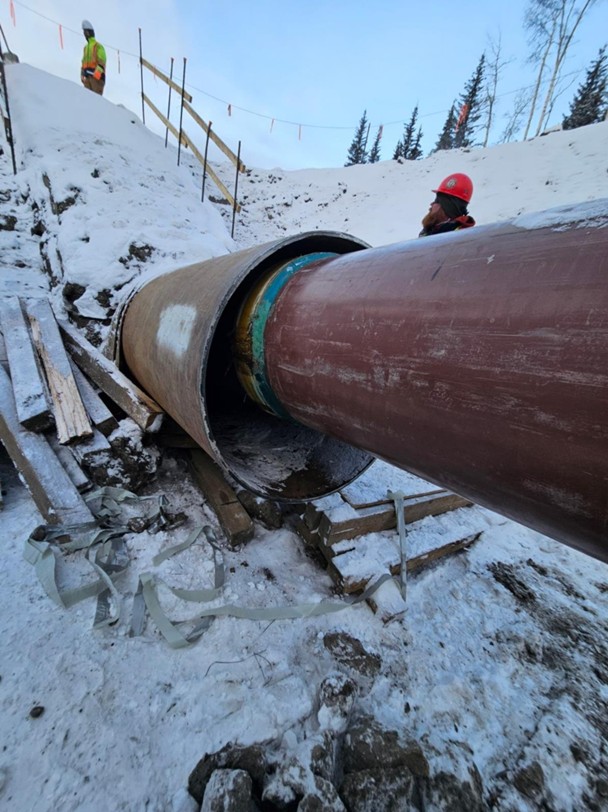
Casing spacer after HDD pull: Damage to coil but not pipe
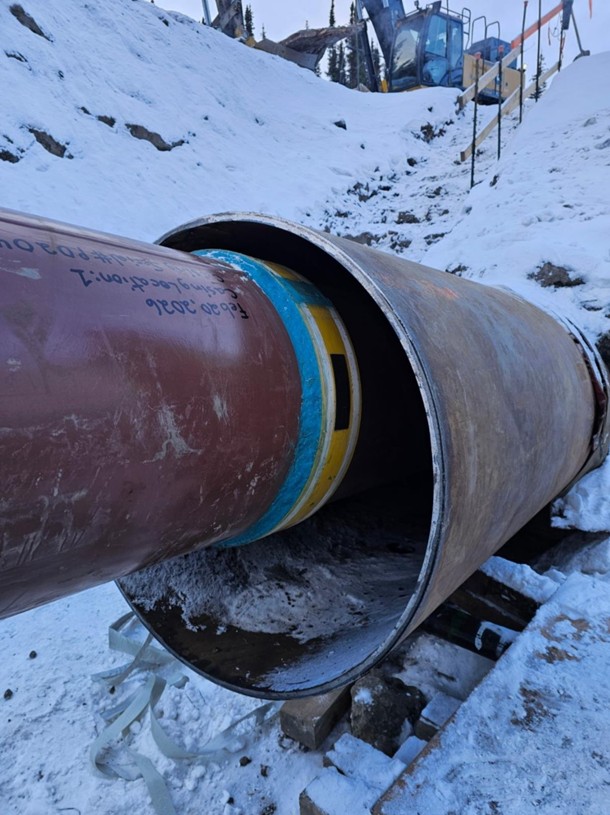
Casing spacer after HDD pull: No damage to pipe or coil